
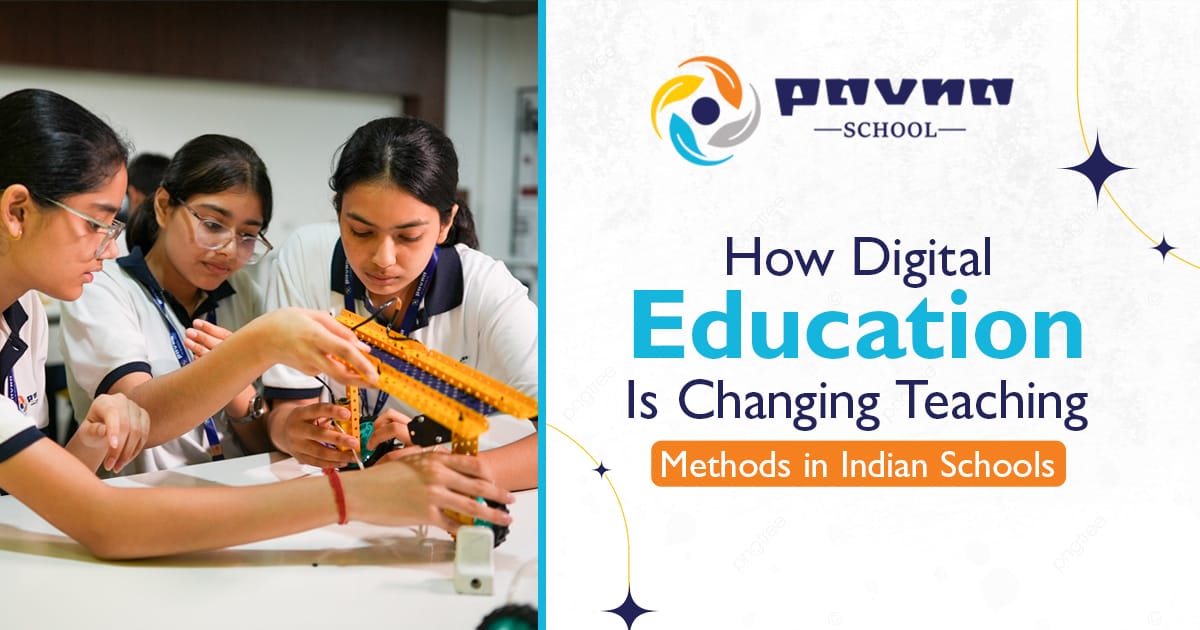
The classrooms in India are different today than ever five years before. Interactive panels are replacing chalkboards, digital resources are supplementing printed worksheets, and lesson plans are integrating more and more digital resources to supplement or replace textbooks. This is more than a cosmetic change. Technology in education is proving to be a true paradigm shift in the culture of the Indian classroom and the way teachers teach, students learn, and progress is measured.
The Rise of Smart Classrooms
The pivot around which this change is happening is the smart classrooms. A smart classroom will have an interactive display, internet access, and access to a digital content library, freeing the teacher from the limitations of traditional explanations. This is a geography lesson with a twist: a live satellite map. Instead of a textbook drawing of the human heart, a biology class can lift up a 3D model of the heart.
This helps students see abstract concepts. It means that teachers can create lessons that go beyond what can be presented on a whiteboard. Smart classrooms are already being implemented in many private schools across cities such as Bangalore or Jaipur, and government initiatives are also rolling out the same facility to schools in smaller towns and districts.
Digital Learning Is Reshaping the Student Experience
Digital learning platforms are now used alongside and, in some cases, supplanting to conventional homework and revision. The apps enable students to take practice tests, watch explanatory videos and revisit the material at their own speed, and this works better for many different learning styles than a standard classroom time could ever hope to.
This change also helps in personalization. A student having trouble with the algebra can watch a video explanation any number of times he/she wants, which a class period of 40 minutes is unlikely to enable. This diminishes the difference in achievement between fast and slow learners over time, which traditional teaching methods sometimes failed to sufficiently address.
Modern Teaching Methods Built Around Technology
More and more, the way teachers are teaching is planned with the use of digital tools as a starting point and not as an add-on. Homework-based learning, in which students engage with content via video outside of the classroom or in the classroom, is gaining popularity. Gamified learning is making subjects that have been previously tedious interesting to younger students by offering points, badges, and/or levels to track student progress.
This is also helping teachers save time by using digital resources like shared question banks, editable worksheets and collaborative documents. This allows more time for instruction instead of attending to administrative duties.
Digital Lesson Planning Saves Teachers Time
One of the most practical changes that teachers can make is to make use of digital lesson planning. Many schools no longer keep physical diaries of lessons, but rather use software that allows lesson planning, tracking of the syllabus and assessment schedules to be kept in a single location.
There are a number of obvious advantages here. Lesson plans may be reworked from one academic year to the next rather than being recreated. Coordinators may monitor progress of teaching and learning within a department without having to request physical documentation. A teacher can also have a substitute copy the lesson plan digitally, rather than lose a class to confusion.
Education Technology in India Is Growing Beyond Metro Cities
The education technology sector in India had traditionally been focused in metros and high-budget schools, but that has now changed. Digital education in India is now being introduced in tier-2 and tier-3 cities like Madhya Pradesh and Uttar Pradesh, with affordable tablets and low-cost internet plans making it possible to introduce digital education in schools.
This growth is important because it helps to close the gap between schools with more and less funding. Digital access to content libraries and tools for teaching can be found at a school in a small town now that it was previously available only in larger cities.
Technology in School Education Requires the Right Balance
Technology in school education is not just about the installation of new devices. Successful schools typically do three things: They have effective infrastructure, they provide teachers with training on effective use of the tools, and they have content that is actually aligned with the curriculum.
Even the best smart classroom setup cannot be fully utilized without teacher training. Digital content can draw students’ attention away from learning if it is not aligned with the curriculum. The best results are found in schools where technology serves as a teaching partner, rather than a substitute for teachers.
What This Means for Indian Schools Going Forward
The instructions are very clear. Indian schools are moving towards a model of digital tools that are used at every stage from planning, through teaching, to assessment. Adapting early, schools will be better equipped to provide a more engaging, personalized, and efficient learning environment, and they will set the stage for students to thrive in a world that demands digital literacy.
Frequently Asked Questions
Which is the greatest advantage of smart classrooms in Indian schools?
Smart classrooms turn the lesson into a more visual and interactive one, which enables the students to grasp abstract concepts more easily than teaching with textbooks.
What are the differences between digital learning and classroom learning?
Digital learning also provides students with the opportunity to “revisit” material at their own speed in their own time, using apps and videos, instead of a set classroom schedule.
Is there only education technology in big cities of India?
No. Accessibility of devices, Internet, and government support have opened education technology to tier-2 and tier-3 cities.
How does a teacher know how to incorporate digital lesson planning into their practice?
Yes. Training allows teachers to learn how to use digital tools and not simply to use a digital copy of the same process.